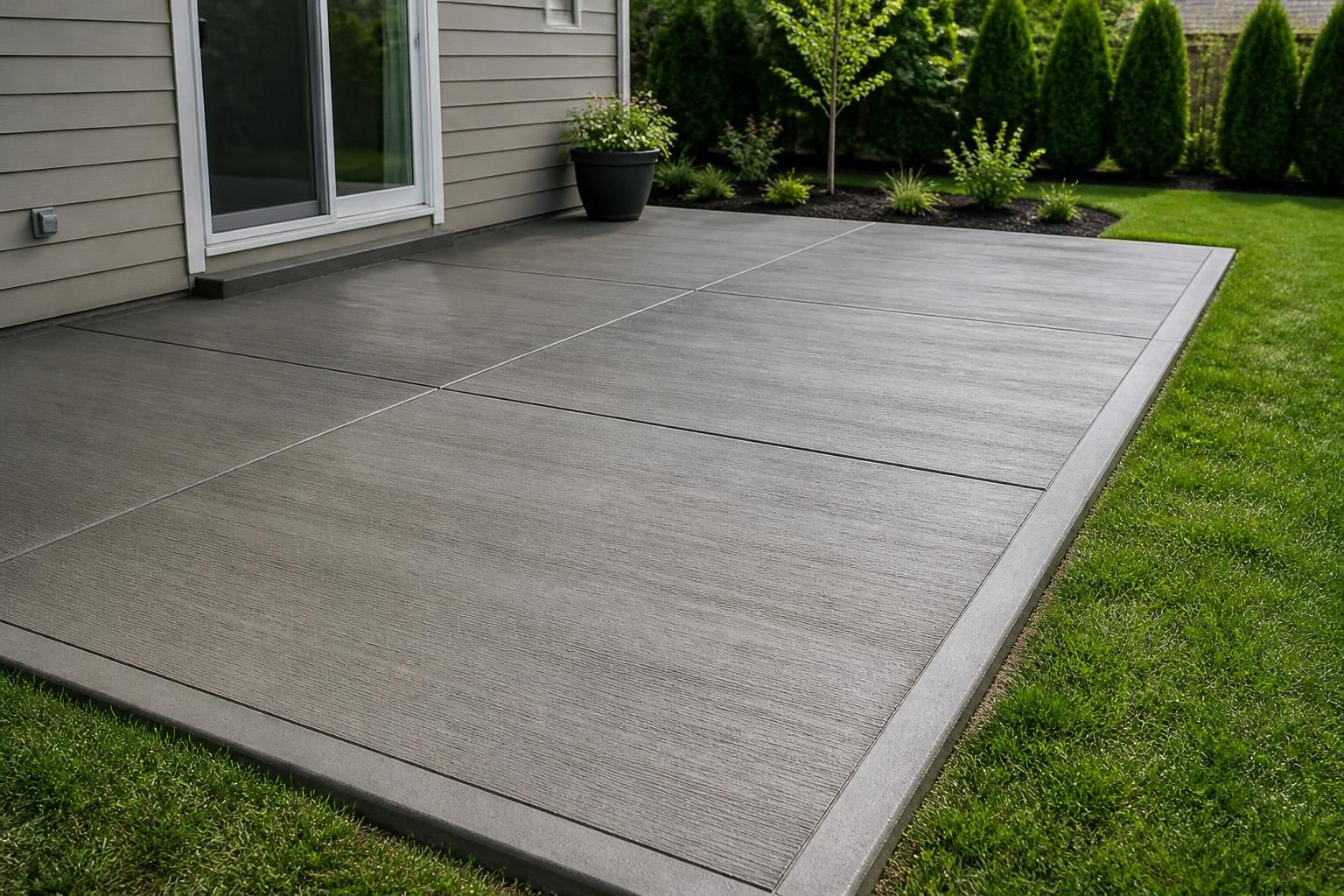
McBrides Construction LLC handles concrete services in Syracuse, NY for homeowners dealing with cracked, sunken, flaking, or worn-out concrete, as well as those planning new slabs, walkways, steps, or pads. If you have concrete that looks bad, holds water, or has become a trip hazard, or you want something new poured, call or send a request and we will set up a free estimate.
Most people notice the problem after a hard winter. A crack that was hairline in the fall is now wide enough to catch a shoe, a step has pulled away from the house, or a patch of the driveway has gone rough and crumbly. Ignoring it usually lets water in, and water is what turns a small flaw into a replacement job. The next step is simple: get someone to look at it, explain what is going on underneath, and give you a written scope you can compare.
Concrete projects around Syracuse range from a single repaired section to a full new pour. When you contact us, describe what you have and what you want. Common jobs include:
If your project does not fit neatly in this list, ask. Many jobs combine concrete with other work we do, and it is easier to plan them together.
Concrete rarely fails overnight. It gives warning signs, and reading them early can keep the repair small.
Hairline cracks are common and often cosmetic. Cracks that are widening, have one side higher than the other, or run across the full width of a slab suggest movement underneath. Slabs that slope toward the house or leave gaps along the foundation deserve a closer look, because water will follow that slope.
When the top layer peels away or the surface turns rough and sandy, moisture and freezing have been working on it. Deicing salt makes this worse. Surface damage can sometimes be repaired, but if it is widespread, the slab may be near the end of its life.
This is the question behind most concrete calls. Repair makes sense when the slab is mostly solid and the damage is limited: a few cracks, a chipped step edge, or one section that has shifted. Replacement makes sense when the damage is spread across the slab, sections keep sinking, or the surface is breaking down all over.
Keep in mind that replacing concrete includes breaking out and hauling off the old material, preparing the base, and pouring new work. That is a bigger scope than patching. This page covers both repair and new concrete work. Decorative finishes, drainage correction, or grading changes around the house may be a separate scope, so mention them when you request an estimate and we will tell you how they fit.
Every property is different, but a typical concrete project follows this order:
Central New York is hard on concrete. Winters bring repeated freezing and thawing, and water that gets into small cracks expands as it freezes and pushes the crack wider. Road salt and deicers tracked onto walkways and driveways can speed up surface flaking. Many local yards also have soil that holds water, which can lead to settling if the base underneath is not prepared well.
Because of that, most outdoor pours are scheduled in the warmer months, when the ground is workable and concrete cures more predictably. Repairs and planning can start earlier, so the project is ready when conditions allow. If you are thinking about a spring or summer pour, asking for an estimate early usually gives you more scheduling choice.
You do not need to be a mason to judge a job. Use these standards with any contractor:
Concrete pricing depends on the specifics of your site and scope. The main factors are:
A clear written quote should spell out the exact area being worked on, what is being removed, what is being poured, the finish, and the cleanup. It should also explain how changes are handled if something unexpected shows up, such as soft ground under an old slab. We provide free estimates, so you can compare scopes before deciding.
Whoever you talk to for concrete work around Syracuse, these questions help you compare fairly:
It depends on the scope. A small repair is much quicker than removing and replacing a driveway section. Forming and pouring may be done quickly, but curing takes additional time before the concrete can be used. We can give a clearer timeline once we see the site.
Most outdoor concrete work is done in the warmer months, when the ground is not frozen and curing is more reliable. Planning and estimates can happen any time of year, which helps you secure a spot on the schedule.
Often, limited cracking and surface damage can be repaired. If a slab has sunk, shifted in several places, or is breaking down across its surface, replacement tends to hold up better. A walkthrough is the easiest way to tell the difference.
Pricing is based on the area, thickness, demolition and hauling, ground preparation, access, finish, and added details. We put the scope in a written estimate so you can see what each part covers.
New concrete needs curing time before it takes foot traffic, and more time before it handles vehicles or heavy loads. Weather affects this, so we will talk through the right wait for your project.
Call or send a request describing the area, what is wrong with it, and what you would like done. Photos and rough measurements are helpful. From there we set up a free estimate and walk through the options with you.
Start Your Project
Tell us about your kitchen, bathroom, basement, deck, floors, or walls. We will talk through your goals and help you take the next step toward a finished space you will enjoy.