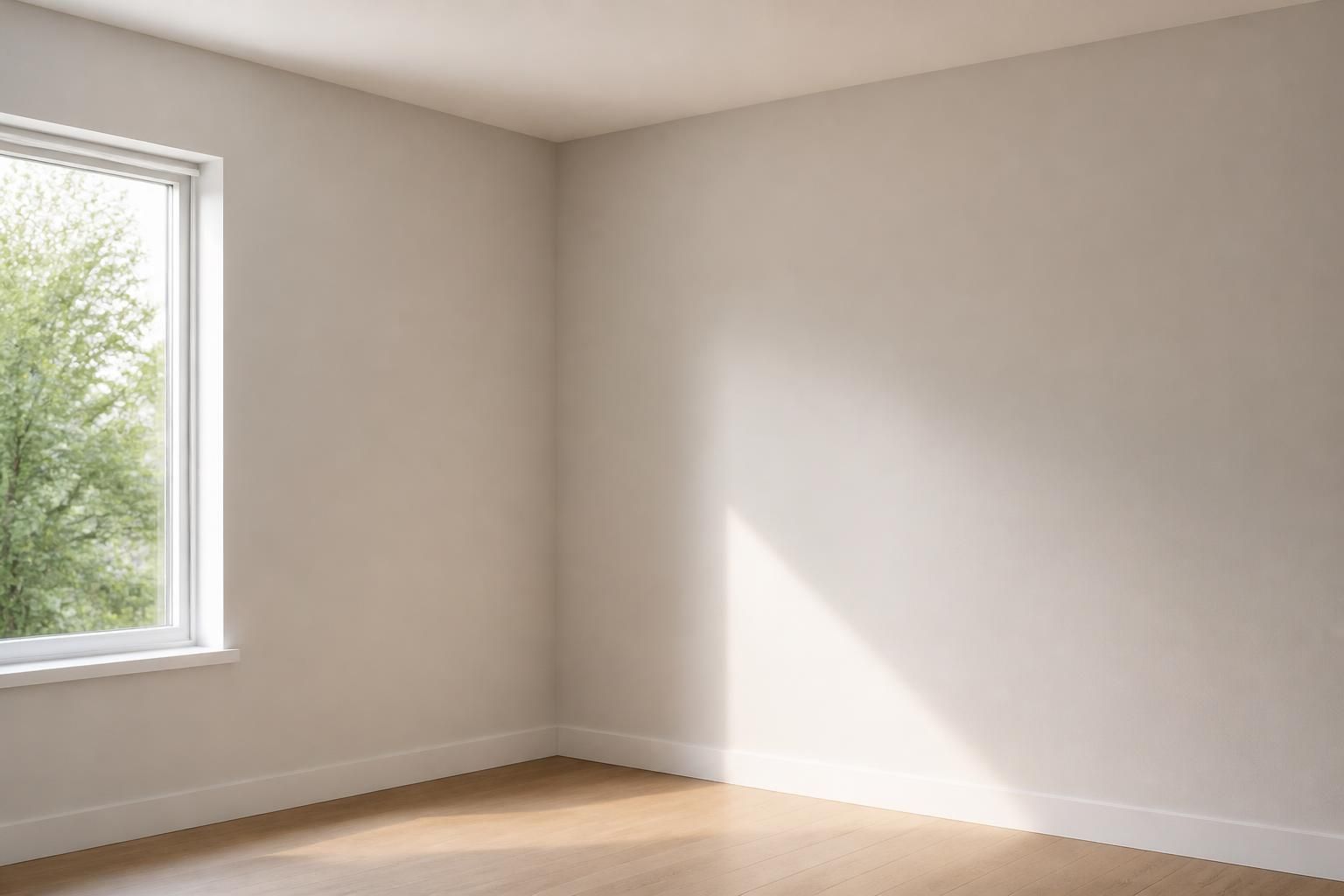
McBrides Construction LLC handles drywall services in Syracuse, NY, including hanging new sheets, taping and mudding seams, sanding, and patching holes, cracks, and damaged ceilings. This page is for homeowners with a wall that needs repair, a room that is being remodeled, or a space like a basement that needs walls built out. To get started, call or send a request for a free estimate.
Maybe there is a doorknob-sized hole behind a bedroom door, a stained ceiling patch, nail pops that keep returning, or seams that have started to show through the paint. Or you have opened up a wall for a remodel and now need it closed up and smooth. Drywall work looks simple until you see a bad patch under a good light, so it helps to know what the job involves before you book it.
Drywall is the sheet material that forms most interior walls and ceilings in homes around Syracuse. Our drywall services cover the full range, from small repairs to full installation.
We work with homeowners across Syracuse and nearby towns, including Liverpool, Fayetteville, Dewitt, Cicero, Manlius, East Syracuse, North Syracuse, Salina, Bridgeport, Solvay, and Clay.
Some drywall damage is obvious. Other signs are easy to ignore until they get worse. Watch for these:
Syracuse has long, cold winters and humid summers. Most houses go through seasonal movement as materials expand and contract, and that movement is a common reason hairline cracks and nail pops appear.
Most drywall jobs fall into one of two groups. Knowing which one you have makes it easier to compare quotes.
Repair work is about making damage disappear. Small holes may need only mesh and compound. Larger holes usually need a cut-out and a new piece of drywall fastened in place, then taped and finished. Ceilings take extra care because light across a ceiling shows every ridge.
New work includes basements, additions, and remodeled rooms where walls are being framed or opened. Sheets are measured, cut around outlets and openings, fastened, taped, coated, and sanded. This is where drywall ties into other projects we handle, such as basement finishing and residential remodeling.
Homeowners often expect a patch to be done once the hole is gone. In fact, drywall finishing and painting are two different steps. Drywall work ends with a smooth, sanded surface that is ready for primer. Painting is a separate service, so if you want it as part of your project, ask us when you request an estimate.
Drywall repair also does not fix whatever caused the damage. If a ceiling stain came from a leak, the leak has to be located and stopped first, or the new drywall will stain again. Ask about this before any wet or stained material is replaced.
Every project is different, but most drywall jobs follow the same sequence:
Because compound needs drying time between coats, even a small repair is often spread across more than one visit. Humid weather can slow drying, so build in some flexibility.
You can judge any drywall provider by the finished surface. Use these standards:
Drywall pricing depends on the details of your project. The main factors are:
A clear written quote should spell out the scope room by room, what finish level you are getting, what is not included (such as painting), how debris removal is handled, and how changes are priced if something unexpected turns up behind a wall.
Before you hire anyone for drywall in the Syracuse area, ask:
It depends on the size of the damage. Small patches still need coats of compound to dry between steps, so even a modest repair may take more than one visit. Larger projects take longer. Your estimate should explain the expected schedule.
There is no set schedule. Many Central New York homes see small cracks or nail pops as the seasons change, and these are usually minor. Larger repairs come from water damage, remodeling, or accidents.
It is based on the amount of drywall, the type of repair or installation, ceiling work, access, finish level, and any removal involved. A written estimate should lay these out so you can see what drives the total.
A well-finished patch should blend in once it is primed and painted. Texture, sanding, and the paint sheen all affect how invisible it is. Matching texture on textured walls takes extra attention.
We can replace and finish damaged drywall. The source of the water needs to be fixed first, and wet material behind the wall should be dry before new sheets go up.
Yes. We hang and finish drywall for basement projects, kitchen and bathroom remodels, and other renovations. Call or send a request to talk through your space and get a free estimate.
Start Your Project
Tell us about your kitchen, bathroom, basement, deck, floors, or walls. We will talk through your goals and help you take the next step toward a finished space you will enjoy.